
This update is related to the Possible link between OA/TOF and “lost twin” study. Visit the research page for more information.
By Charles Shaw-Smith, Consultant Clinical Geneticist at Royal Devon University Hospital.
TOFS members may recall a presentation on this topic, which I gave together with an American colleague back in November 2023; and a subsequent webinar presentation in February 2024. Following these, I was delighted that there was clearly very significant interest in the study.
For those unfamiliar, the study aims to examine the possible role of a “lost” twin in OA/TOF. A lost twin is one of a twin pair that was present in early pregnancy but which later miscarried, leaving the surviving co-twin to progress to term and birth as an apparent “singleton”. The study aims to investigate whether such a lost twin may be a factor in the cause of OA/TOF in some affected children.
Many members took the trouble to return clinical information to me, and then a cheek swab sample from the affected individual in the family, for processing and analysis. I am really grateful to all TOFS members who took part, including a substantial number from overseas who expressed interest. The response was really excellent and some of the histories and stories that I received really did reinforce my belief that there is some merit in the hypothesis.
Regrettably, although the samples were sent to my US collaborator, it did not prove to be possible for her to carry out the required laboratory-based analysis, and the collaboration had to be discontinued. Subsequent to that, contact with another potential collaborator from the Netherlands showed initial promise, but fell foul of some funding application technicalities.
Most recently, I have been working with an Exeter-based scientist, Professor John Mill, who has extensive experience in studies of methylation – precisely the technique that is required for the “lost twin” analysis. Last year, we applied to the Exeter Biomedical Research Centre for funding to carry out the project, but the application was turned down.
Undaunted, I am planning to go ahead with a small pilot project, for which we will be able to pull together the funding required from different sources. The current status of the project is that I am applying the finishing touches to a re-written application for ethical approval for the project, which is needed and will be submitted to Exeter University Research Ethics Committee. Once this is approved, I will be contacting a small number (around 20) of individuals who previously committed to the project by returning clinical information and a sample. In order to participate, it will be necessary for participants to resubmit the new, signed, consent form, and a further sample – my sincere apologies for the duplication and inconvenience.
This brief update is just to reassure you that the project is very much alive, has not been abandoned, and whilst I cannot make any promises about timeframe, I would like to reassure all interested TOFS members that I will be continuing in my efforts to get an answer to this fascinating question. Please of course feel free to contact me via the TOFS office should you have any questions.
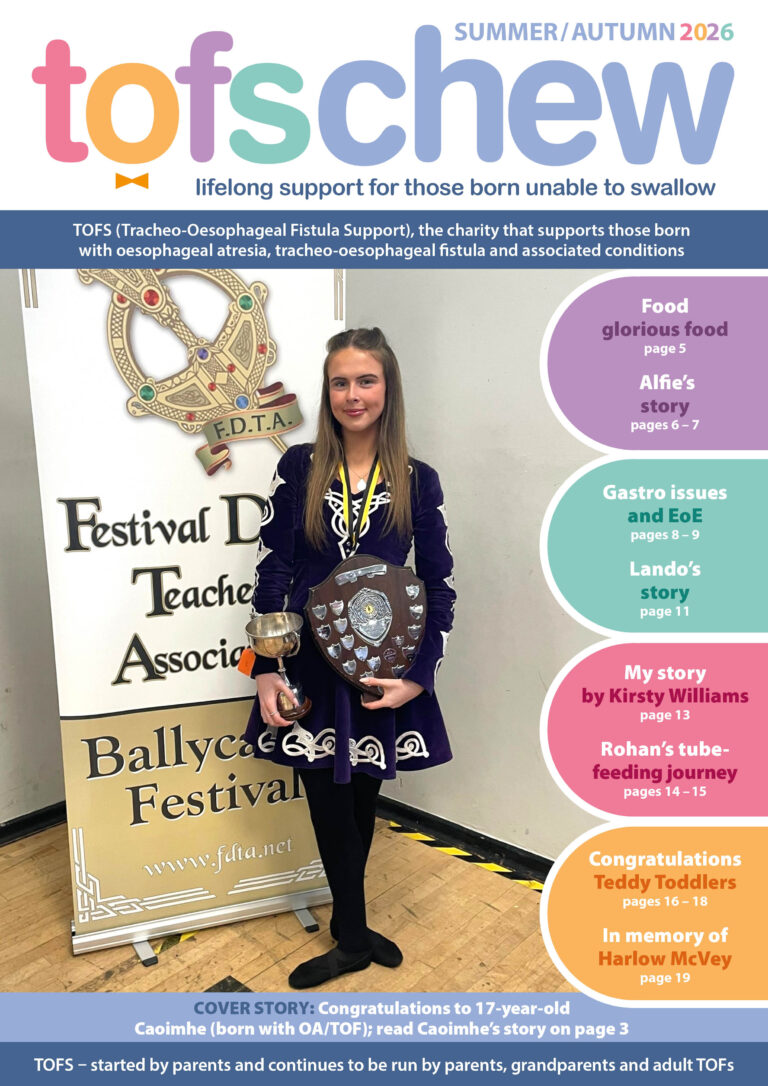
This update was originally published in the Spring 2026 edition of Chew Magazine.